
Fleet Breakdowns Handled Where They Stop
Commercial and Fleet Services in Augusta for businesses facing roadside failures across multiple vehicle types
Commercial fleets operate under time pressure that private vehicles don't—a delivery truck stopped on the shoulder isn't just an inconvenience, it's a missed window, a delayed route, and a vehicle sitting exposed on a public roadway. Roadside Redeemers LLC provides fleet roadside assistance in Augusta with a response framework built around commercial vehicles, covering tire, battery, fuel, and mechanical issues across multiple vehicle classes. The service is designed for dispatchers and fleet managers as much as for the drivers themselves, with the goal of returning the vehicle to service with minimal disruption to the route or schedule.
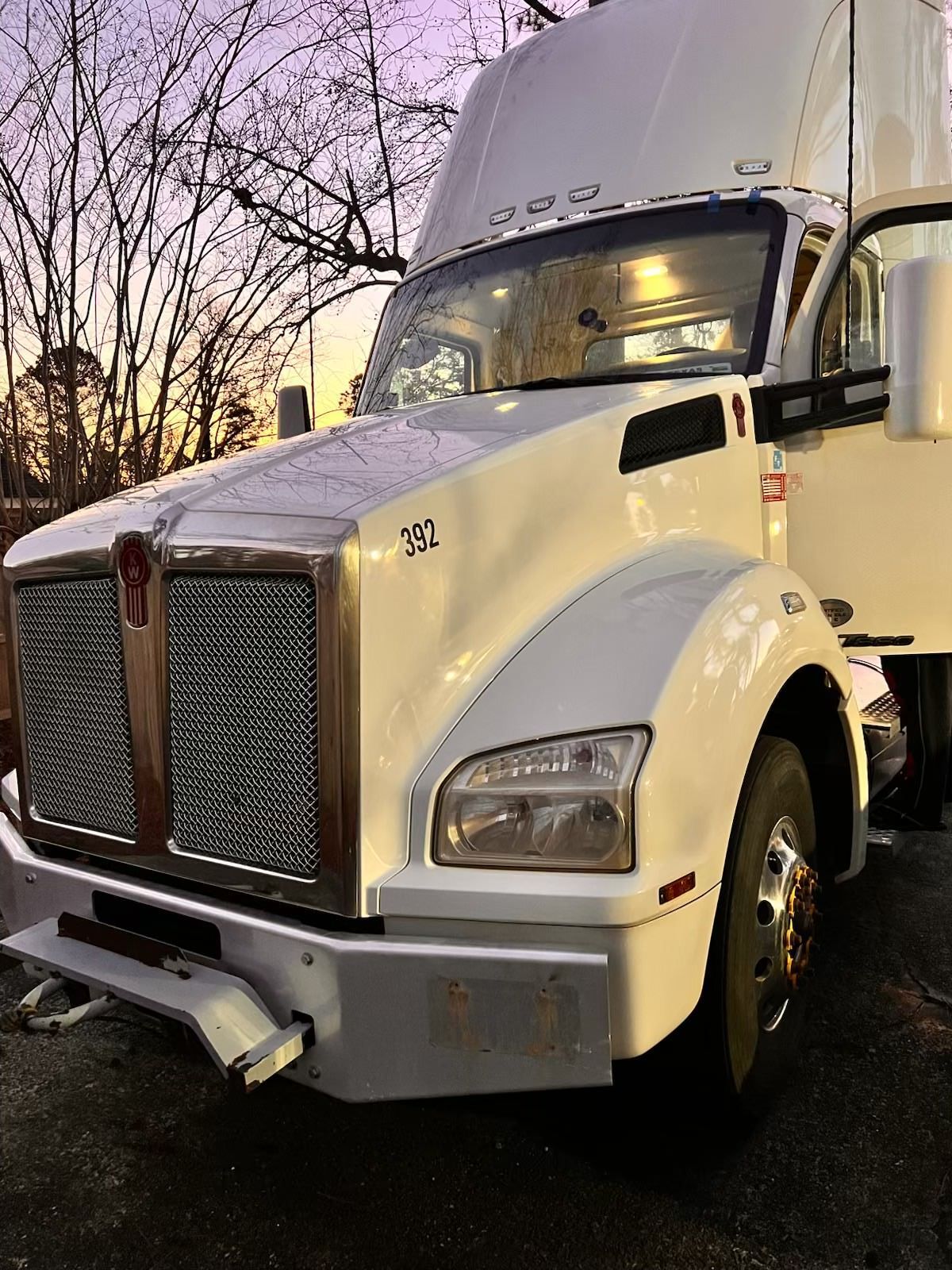
Commercial vehicle support differs from standard roadside assistance in a few specific ways. Larger vehicles—box trucks, delivery vans, and heavy commercial units—require different equipment for tire service and battery work than passenger vehicles, and the weight class of the vehicle affects what type of intervention is possible on-site. The technician assesses the vehicle type before arrival to ensure the response is properly equipped, rather than arriving with tools sized for a sedan when the call involves a diesel-powered commercial unit.
Fleet managers can call (855) 276-5546 to establish how commercial vehicle calls are handled and to report active roadside situations for any vehicle in the Augusta area.

Why Commercial Fleet Response Differs from Standard Roadside
Fleet roadside assistance involves a broader service scope than a single-vehicle call because commercial operations may have multiple vehicles on the road simultaneously. When one unit goes down, the response needs to account for both the immediate vehicle and the potential downstream effect on delivery schedules or service commitments. Roadside Redeemers LLC handles the four most common commercial failure categories on-site: tire failures, battery and electrical issues, fuel delivery for out-of-fuel commercial vehicles, and minor mechanical repairs that can be resolved without a shop visit. For commercial vehicles running diesel—which is standard across most freight and delivery fleets—the fuel delivery component specifically includes diesel, not just gasoline.
After a fleet vehicle is serviced on-site, the observable result is a driver who can complete the route or return the vehicle to base without a tow. Roadside Redeemers LLC provides a clear account of what was done to the vehicle so fleet managers have an accurate record for maintenance tracking—that documentation feeds directly into preventive scheduling rather than disappearing into a verbal-only handoff. Knowing what failed, what was replaced or repaired, and what the vehicle's condition was at the time of the call helps fleet operations make informed decisions about that unit going forward.
Fleet service is most effective when dispatchers have a direct contact number to report calls rather than routing through a driver's personal account—that distinction matters for billing clarity, response coordination, and keeping individual drivers focused on their route rather than managing a service call on their own. Commercial accounts benefit from establishing that communication line before a breakdown occurs rather than during one.
Questions Before Starting Your Fleet Service Account
Fleet managers and operations coordinators in Augusta typically ask about how commercial roadside assistance differs from consumer-level service before committing to a provider. The questions below address the most relevant operational considerations.
What vehicle classes are covered under commercial fleet roadside service?
The service covers a range of commercial vehicles including cargo vans, box trucks, and diesel-powered delivery units—the technician is briefed on vehicle type before dispatch to arrive appropriately equipped.
How does the service handle multiple vehicles needing assistance at the same time?
Each call is treated as a separate dispatch, and fleet managers are advised to report concurrent breakdowns at the same time so coordination can begin on both simultaneously rather than sequentially.
Why does Augusta's road network create specific challenges for commercial fleet operations?
The region's combination of interstate freight corridors, industrial access roads, and rural county routes means fleet vehicles break down across a wide geographic spread, and response planning accounts for that variation in road type and access conditions.
What maintenance information is provided after an on-site fleet service call?
The technician documents what was serviced or replaced, the condition of the vehicle at time of service, and any observed issues that may require follow-up—that record is provided to the fleet contact rather than retained only in the driver's account.
When should a fleet manager call for roadside assistance versus dispatching a tow directly?
Roadside assistance is the right first call when the vehicle type and failure category fall within mobile service scope—tire, battery, fuel, and minor mechanical—because on-site resolution is faster and less disruptive than towing to a shop for issues that don't require one.
Roadside Redeemers LLC is equipped to support Augusta-area fleet operations when vehicles go down on the road—call (855) 276-5546 to discuss how commercial fleet response is coordinated and to set up direct dispatcher contact for future calls.